|
The Nevada Psychological Association in collaboration with
The Nebraska Psychological Association and 10 other State Psychological Associations
presents
From Stories to Solutions: A Prevention-Focused Approach to Violence Risk
Presented by Melissa Hunter, Ph.D. & Samuel Hunter, Ph.D.
Friday, April 17th, 2026 10:00am - 12:00pm PST
2 CE Credits
This workshop will be presented as a live, virtual presentation via Zoom webinar.
Participants will be able to communicate with the presenter in real-time during the course of instruction. As participants can interact in real-time with the presenter, this webinar meets the requirements as a live or face-to-face CE training by the State of Nevada Board of Psychological Examiners (not considered homestudy learning credits).
 Approved for Nevada Psychologists, LCSWs and MFTs. Approved for Nevada Psychologists, LCSWs and MFTs.
NPA is approved by the American Psychological Association to sponsor continuing education for psychologists. NPA maintains responsibility for this program and its content.
About the Workshop:
High-profile acts of violence are often followed by stories that attempt to explain what happened and why. While these narratives can be compelling, they rarely offer clear guidance for how clinicians, educators, and communities can prevent harm before it occurs. This training builds on existing research and explanatory frameworks to shift the focus from retrospective understanding to forward-looking prevention.
Using a developmental, contextual, and ethically grounded approach, this workshop explores how risk emerges through the interaction of individual vulnerabilities, social environments, and systemic factors. Participants will learn to recognize behavior-based warning signs without relying on stigmatizing assumptions, apply multi-tiered prevention strategies, and navigate the ethical tensions inherent in this work.
Learning Objectives:
At the end of this presentation, attendees will be able to:
1. Explain how descriptive and explanatory models of violent behavior can be extended into practical, prevention-focused approaches for use in clinical, educational, and community settings.
2. Describe how risk for serious harm develops over time through the interaction of individual, social, and environmental factors, rather than being determined by diagnosis, identity, or personality alone.
3. Recognize behavior-based warning signs that may indicate increased vulnerability or need for support, while avoiding assumptions that stigmatize neurodivergent individuals or those with mental health challenges.
4. Apply developmentally informed, tiered prevention strategies (universal, targeted, and intensive) to real-world scenarios involving youth and young adults.
5. Use ethical decision-making principles to balance safety, autonomy, dignity, and inclusion when responding to concerning behaviors or situations.
Audience:
This presentation is intended for psychologists, other licensed mental health providers, and graduate students of psychology. Level of learning is Intermediate.
About the Speakers:
 Melissa Hunter, PhD, is an assistant professor at the University of Nebraska Medical Center's Munroe-Meyer Institute and a licensed psychologist in MMI's Department of Psychology. Hunter received her doctorate in school psychology at the University of Southern Mississippi, completed her internship at the Munroe-Meyer Institute and her post-doctoral fellowship at the University of Oklahoma Health Sciences Center Child Study Center. Melissa Hunter, PhD, is an assistant professor at the University of Nebraska Medical Center's Munroe-Meyer Institute and a licensed psychologist in MMI's Department of Psychology. Hunter received her doctorate in school psychology at the University of Southern Mississippi, completed her internship at the Munroe-Meyer Institute and her post-doctoral fellowship at the University of Oklahoma Health Sciences Center Child Study Center.
Hunter practiced as a licensed psychologist in Pennsylvania for 15 years, providing outpatient child psychological and behavioral health services and school-based consultation for children and adults with a wide range of presenting needs. She also served as adjunct or teaching faculty at the University of Oklahoma and the University of Nebraska at Omaha, and taught at Pennsylvania State University for nine years, where she was an associate teaching professor of psychology. Currently, Hunter provides behavioral school-based consultation to the Madonna School, a private school for children and adults with developmental disabilities. In addition, she engages in clinical activities at the Munroe-Meyer Institute. In both settings, Hunter supervises pre-doctoral psychology interns, post-doctoral fellows and undergraduate psychology students. ( https://www.unmc.edu/mmi/directory/patient-care/psychology/melissa-hunter.html)
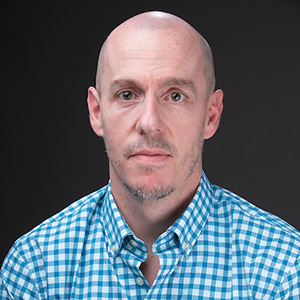 Samuel Hunter, PhD, Regents-Foundation Professor of Industrial and Organizational Psychology, is an expert in leadership and innovation, exploring their positive and negative applications, and an expert in counterterrorism and prevention with an emphasis industrial and organizational psychology. He is Director of Academic Research at the National Counterterrorism, Innovation, Education and Technology (NCITE) Center at the University of Nebraska - Omaha. Samuel Hunter, PhD, Regents-Foundation Professor of Industrial and Organizational Psychology, is an expert in leadership and innovation, exploring their positive and negative applications, and an expert in counterterrorism and prevention with an emphasis industrial and organizational psychology. He is Director of Academic Research at the National Counterterrorism, Innovation, Education and Technology (NCITE) Center at the University of Nebraska - Omaha.
His research, funded by entities like the National Science Foundation (NSF) and the Department of Homeland Security (DHS), has been featured in Fortune, Fast Company, and The Washington Post.
He has published over 120 peer-reviewed works and consulted organizations like the Johnson & Johnson, Epic Games, and Lockheed Martin. He is a fellow at the Society for Industrial and Organizational Psychology (SIOP) and the National Strategic Research Institute (NSRI). (https://www.unomaha.edu/uno-experts/faculty-experts/samuel-hunter.php)
Registration Fees:
NPA members: $65.00 (Early bird discount is $50.00 until 3/16/26)
Non-members: $90.00 (Early bird discount is $70.00 until 3/16/26)
Student members: $20.00 (Registration fees waived for active student members with code)
Student non-members: $50.00
References:
Welch, C., Senman, L., R., Picciolini,C., Robison, J., Wetphal, A., … & Penner, M. (2003). Understanding the use of the term weaponized autism in all alt-right social media platform. Journal of autism and development disorders, 53(10), 4035-4046.
Hunter, S. T., Neely, B. H, Welch, C., & Moeller, A. N. (2025). Reconciling Jekyll and Hyde: The future of masculinity research within the domestic violent extremism context. American Psychologist.
Hunter, S., d'Amato, A. L., Elson, J.S., Doctor, A. C., & Linnell, A. (2024). The Metaverse as a Future Threat Landscape: An Interdisciplinary Perspective. Perspectives on terrorism (Lowell, Mass.), 18(2), 100.
General Information:
Zoom Login Link and Handout Materials: Zoom webinar login link and Handout materials will be sent out electronically to all attendees no later than one week prior to workshop date. Printed handout materials are not available for purchase as this CE training is being offered remotely.
Workshop Location: Live, virtual webinar via Zoom.
Closed Captions: Live audio captions will be provided for this event. If you need additional disability-related accommodations, please contact us by email us at [email protected] or by phone (888) 654-0050. Requests should be made at least two weeks in advance of workshop date.
Refunds & Grievance Policy: Participants may direct questions or grievances to NPA at (888) 654-0050. An administrative fee of $30 will be charged for cancellation of registration. Please note, no refunds will be granted less than 10 days prior to workshop date 04/17/2026.
Approval: Approved by Nevada Board of Psychological Examiners. Nevada Psychological Association (NPA) is approved by the American Psychological Association to offer continuing education for psychologists. NPA maintains responsibility for the program and its content. NPA will issue certificates of completion. APA CE rules require that we only issue credits to those who attend the entire workshop. Those logging into the Zoom webinar more than 15 minutes late or logging off before the entire workshop is completed will not receive CE credits (i.e. partial CE credit will not be issued).
There is no potential conflict of interest and/or commercial support for this program or its presenter.
|