NPA's 38th Annual Conference
Friday, May 8, 2026 from 8:30 AM to 4:30 PM
University of Nevada Las Vegas, 4505 S Maryland Pkwy, Las Vegas, NV 89154
6 CE Credits
 |
|
Approved for Nevada Psychologists, MFTs/CPCs and LCSWs.
NPA is approved by the American Psychological Association to sponsor continuing education for psychologists.
NPA maintains responsibility for this program and its content.
|
REGISTRATION
| Member Status |
Participation |
Delivery |
Standard |
| Member Registration |
| Member |
Full-day |
In-person |
$175.00 |
| Member |
Full-day |
Virtual |
$185.00 |
| Member |
Half-day* |
In-person |
$95.00 |
| Member |
Half-day* |
Virtual |
$105.00 |
| Non-member Registration |
| Non-member |
Full-day |
In-person |
$240.00 |
| Non-member |
Full-day |
Virtual |
$260.00 |
| Non-member |
Half-day* |
In-person |
$130.00 |
| Non-member |
Half-day* |
Virtual |
$140.00 |
| Student Registration |
| Student Member** |
Full-day |
In-person |
$65.00 |
| Student Member |
Full-day |
Virtual |
$0.00*** |
| Student Member |
Half-day* |
In-person |
$35.00 |
| Student Non-member |
Full-day |
In-person |
$100.00 |
| Student Non-member |
Full-day |
Virtual |
$115.00 |
*Half-day programming includes either morning or afternoon courses but does not include lunch.
**Undergraduate student members may attend the full-day, in-person event for $25.00.
***Code required for complimentary, virtual student registration.
Top
CONFERENCE AGENDA
|
8:00 AM
|
Registration & Sign-in Open; Student Poster Presentations |
| 8:30 - 9:30 AM |
A Vision for the Future of APA and Psychology
Dr. Arthur Evans, PhD
|
| 9:30 - 10:00 AM |
Break; Student Poster Presentations |
| 10:00 AM - 12:00 PM |
To Live or Die: Working with Suicidal Ambivalence
Dr. Kristen Davis-Coelho, PhD
|
| 12:00 - 1:30 PM |
Annual Business Meeting & Luncheon Awards Program
Detailed schedule available onsite, lunch and beverages provided. |
| 1:30 - 2:45 PM |
Afternoon Session 1: Sexual OCD: Unpacking "Taboo" Themes and Increasing Clinical Competency Treating Adults with S-OCD"
Dr. Jordan Soper, PsyD, ABPP, CST
Afternoon Session 2: The Ins and Outs of Providing Services to Individuals or Families Involved with the Court
Dr. Regina Marshall, PhD
|
| 2:45 - 3:00 PM |
Break |
| 3:00 - 4:30 PM |
Afternoon Session 1: Sexual OCD: Unpacking "Taboo" Themes and Increasing Clinical Competency Treating Adults with S-OCD"
Dr. Jordan Soper, PsyD, ABPP, CST
Afternoon Session 2: The Ins and Outs of Providing Services to Individuals or Families Involved with the Court
Dr. Regina Marshall, PhD
|
| 4:30 PM |
Annual Conference Concludes |
| 4:30 - 6:30 PM |
Social Hour!
Join fellow Nevada psychologists for this relaxed, fun opportunity to end the day with snacks, zero proof beverages, and engaging conversation!
|
Top
COURSE DETAILS
8:30 - 9:30 AM
A Vision for the Future of APA and Psychology
Arthur C. Evans Jr., PhD
Course Overview
This presentation will provide an overview of APA’s strategic goals, including utilizing psychological science and knowledge to make a positive impact on critical societal issues; elevating the public’s understanding, appreciation, and utilization of psychology; strengthening APA’s role as a leading voice for psychology; and preparing the field of psychology for current and future opportunities and challenges. Selected examples of APA’s work will illustrate these priorities in practice across the association. This presentation will also highlight the need for a population-based approach to behavioral health, with an emphasis on the role of psychology and psychologists in promoting this approach. Examples will illustrate how psychological practice and research are essential to advancing a population health framework that supports improved health outcomes for all.
Learning Objectives
- Describe how APA’s strategic priorities can shape the future of psychology.
- Determine ways in which psychological science and practice can contribute to addressing critical societal issues.
- Describe how a population-based framework enables behavioral health professionals to better reach populations across the continuum of care.
About the Presenter

Described as a visionary and transformational leader, Arthur C. Evans Jr., PhD is CEO of the American Psychological Association, the leading scientific and professional organization representing psychology in the United States. Previously Evans served in public policy positions in Philadelphia and Connecticut, where he led the transformation of behavioral health systems and their approaches to serving individuals with complex needs. Evans has employed science, community activism, traditional clinical care, policy, and cross-system collaborations to change the status quo around behavioral health. He has received national and international recognition, including prestigious awards in government, healthcare service, and visionary leadership. He has held faculty appointments at the Yale University School of Medicine, University of Pennsylvania Perelman School of Medicine, Philadelphia College of Osteopathic Medicine, and the Drexel School of Public Health.
|
|
Top
|
10:00 AM - 12:00 PM
To Live or Die: Working with Suicidal Ambivalence
Kristen Davis-Coelho, PhD
Course Overview
Suicidal ambivalence – want to die/don’t want to die - is a common experience for many patients but can be a challenge for clinicians. Increasing attention has been given to this phenomenon over the past few years, with new empirical findings and a new clinical model being published. This workshop will provide a foundation for understanding suicidal ambivalence, its relationship to suicide risk, and interventions therapists can use to address it in treatment.
Learning Objectives
- Define suicidal ambivalence
- Discuss the relationship of age and gender to suicidal ambivalence
- Articulate three research findings on the relationship between ambivalence and risk
- Identify three phases of the suicidal process as posited by the Ambivalence Model of Suicidality
- Name four phase-specific therapeutic interventions based on the Ambivalence Model of Suicidality
About the Presenter

Dr. Kristen Davis-Coelho, PhD, is a clinical psychologist in private practice, a faculty member in the University of Nevada-Reno School of Medicine, and an award-winning author and speaker. Committed to creating systemic solutions, she serves on NPA’s Legislative Committee and is vice-Chair of the Washoe Regional Behavioral Health Policy Board. She is author of the best-selling book, The Best Care for Those with the Least. Dr. Davis-Coelho is passionate about supporting vulnerable community members as well as empowering the dedicated professionals who serve them.
|
|
Top
|
1:30 - 4:30 PM
Sexual OCD: Unpacking “Taboo” Themes and Increasing Clinical Competency Treating Adults with S-OCD
Jordan Soper, PsyD, ABPP, CST
Course Overview
This presentation focuses on assessing and treating sexual themes frequently present within OCD including sexual orientation, pedophilia, sexual harm, impregnation, and scrupulosity. Individuals with OCD experience significant distress with themes of OCD that are often considered “taboo,” resulting in high levels of shame, disgust, avoidance, and distress. This presentation will identify common sexual topics and themes often found in OCD, identify ways to assess and communicate about these themes, and provide resources for treatment recommendations. Participants will increase their familiarity with the assessment of sexual OCD themes, increase familiarity with diversity concerns often impacting symptom presentation and treatment, and will learn specific interventions to integrate sexual themes into OCD treatment
Learning Objectives
- Review OCD symptoms, assessment tools, and treatment options.
- Identify specific sexual OCD themes and describe ways to integrate sexually-related questions into their assessment for OCD.
- Identify sexual-OCD subtypes and recommend treatment interventions using specific examples and case vignettes
- Identify ways to break stigmas and taboos about sexual themes often found in OCD, including differentiation between diagnoses and safety assessments.
- Integrate patients’ diverse backgrounds into treatment allowing for increased cultural competency when treating sexual OCD.
About the Presenter
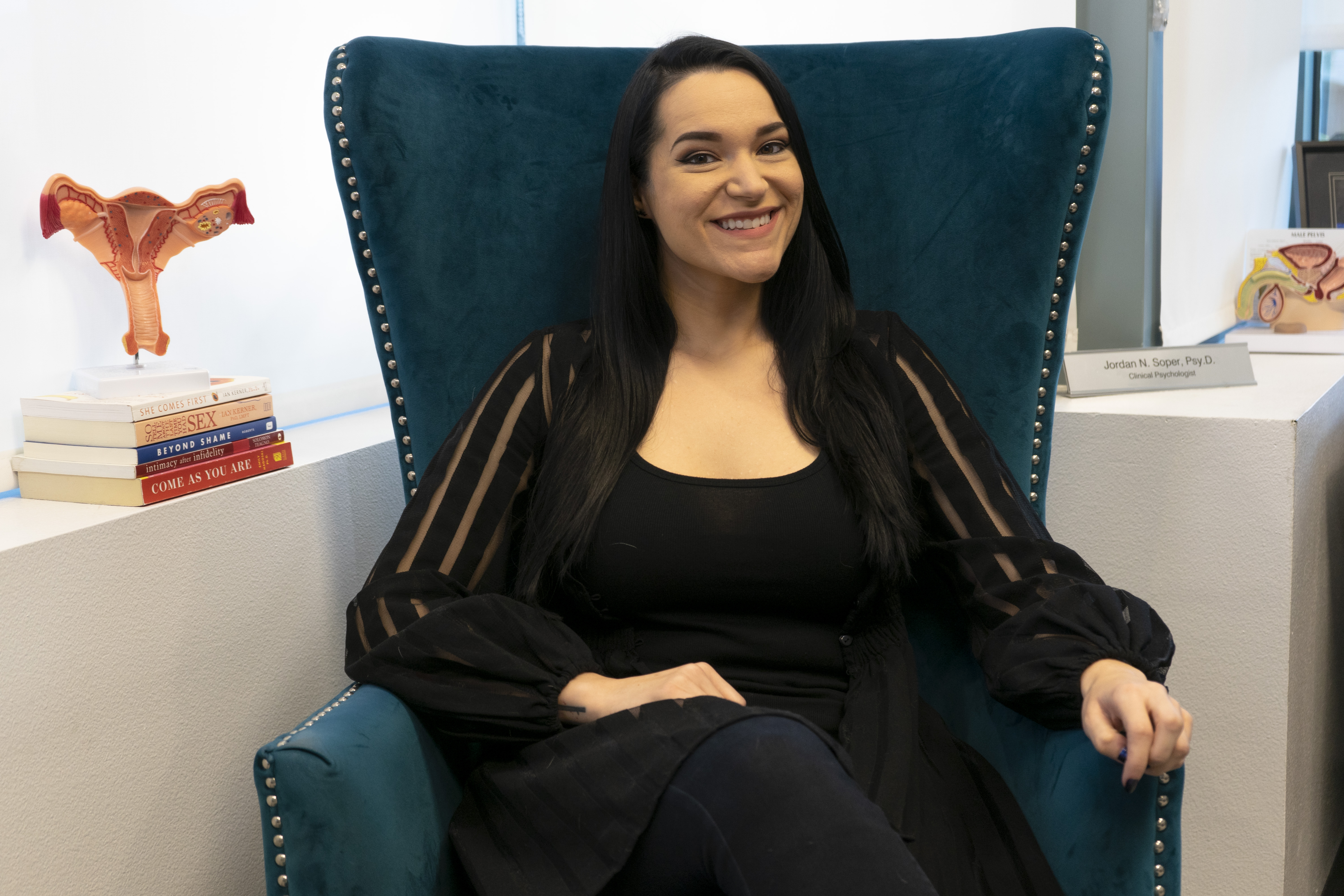
Dr. Jordan Soper, PsyD, ABPP, CST, is a Licensed Psychologist, Board Certified in Behavioral and Cognitive Psychology, AASECT Certified Sex Therapist, and Owner of The Center for Sexual Health and Wellness in Las Vegas, NV. Dr. Soper’s areas of expertise include evidence-based treatment for sexual health and functioning disorders, anxiety, and trauma with diverse populations including military/Veterans, first responders, police officers, members of the LGBTQ+ community, young professionals, students, therapists, sexual assault survivors, and members of the BDSM/Kink/Fetish community. She is passionate about education, advocacy, and using humor to decrease shame and stigma around mental and sexual health concerns. In her free time, she enjoys spending time with her friends and family, two pugs, building costumes for cosplay, playing Dungeons and Dragons, and living every day as if it is Halloween.
|
|
Top
|
1:30 - 4:30 PM
The Ins and Outs Of Providing Services to Individuals or Families Involved With The Court.
Dr. Regina Marshall, PhD
Course Overview
Are you ready to stop feeling blindsided by the legal system? In today's clinical landscape, court involvement is an unexpected reality that can instantly shatter your traditional boundaries and treatment protocols. When a subpoena arrives, do you know your ethical obligations? Can you protect your client's progress while navigating complex legal demands? This essential training will equip you with the specific knowledge to confidently manage the intersection of clinical care and forensic complexity. You will walk away with a clear roadmap of recommendations—from bulletproof informed consent to developing a court-informed treatment plan—that will transform your approach and safeguard your practice. Don't just survive court involvement—master it.
Learning Objectives
- List the major differences between providing clinical services with patients not involved in litigation and providing services with patients in litigation.
- identify and discuss the professional responsibilities involved while providing services to patients involved with the courts.
- Identify additional areas of competence one needs to have as a professional working with individuals/families involved with the courts.
- Describe the additional ethical issues and additional components needed in an informed consent while working with clients involved with the courts.
- Identify and discuss choices of interventions and the implementation of intervention services while a client is involved with the court.
- Identify and describe professional communications to intervention teams, legal professionals and the court.
- Discuss obstacles and challenges faced by marginalized groups when interfacing with the court, e.g., language barriers and cultural misunderstanding.
About the Presenter

Dr. Regina Marshall, PhD, has over 30 years of experience working with children, adolescents, and families across diverse settings, including inpatient, residential, day treatment, and outpatient care. Her early work involved extensive coordination with schools, healthcare professionals, child protection agencies, and probation. In 2001, her practice shifted to assessing and treating adults and adolescents with personality disorders. In 2017 she made another shift and specialized in serving children and families involved in custody litigation, providing evaluations and psychotherapeutic services. Dr. Marshall is committed to developing effective parenting plans and delivering intervention services to complex, high-conflict families in family court. In addition, she is committed to building a bridge between the clinical and forensic worlds to improve communication and collaboration for the benefit of individuals and families involved in the courts.
|
|
Top
|
2026 Call for Posters
The Call for Posters for the 2026 Annual Conference is now closed. Poster submitters receive notice of their acceptance and, if applicable, participation details in late April.
The Nevada Psychological Association invites you to showcase your research at our 2026 Annual Conference. We welcome submissions in psychological, clinical, and applied research.
- Posters will be evaluated on both content quality and presentation.
- Presenters (or a designated representative) must be available during scheduled breaks to discuss their work and answer questions.
A panel of psychologists will review all submissions, with cash prize winners announced during the Annual Business Meeting and Awards Presentation luncheon from 12:00–1:30 PM.
Interested in presenting? Submit your poster today and share your work with a community of engaged professionals.
The Call for Posters for the 2026 Annual Conference is now closed. Poster submitters receive notice of their acceptance and, if applicable, participation details in late April.
Student Poster Submissions should include:
- Poster Title (15-20 words)
- Cover sheet including title, author(s) and institution(s)
- Abstract (500-word maximum)
- Subject area
- Author and Co-Author information: Name(s) of author(s) (first author should be listed first)
- University or business affiliation(s)
- Individual email address(es)
Submission Deadline
The Call for Posters for the 2026 Annual Conference is now closed. Poster submitters receive notice of their acceptance and, if applicable, participation details in late April.
Top
General Information
Location
This workshop will be held in person (with a virtual option via Zoom) at:
The University of Nevada, Las Vegas
4505 S Maryland Pkwy.
Las Vegas, NV 89119
Student Union, Rooms 209 & 213
- Parking is available adjacent to the UNLV Student Union. Details about parking passes are forthcoming.
Virtual attendees will receive a Zoom login link via email one week prior to the workshop.
Additional Information
- Students from local universities will be presenting research posters—please take time to view their work and support their efforts.
- We encourage all attendees to stay for lunch and join our Annual Business Meeting & Awards Program to learn more about NPA and meet our 2026–2027 officers.
Food & Beverages
NPA will provide:
- Complimentary continental breakfast for full day and morning session registrants
- Lunch for full-day registrants
- Afternoon snacks and beverages for full day and afternoon registrants.
Refunds & Grievance Policy
Questions or concerns may be directed to NPA via email at [email protected].
- A $30 administrative fee applies to registration cancellations.
- No refunds will be issued after Friday, April 24, 2026, at 5:00 PM PT.
Breakout Sessions & CE Credit
To ensure a meaningful and interactive experience, this workshop includes discussion-based breakout sessions.
- Virtual attendees will be assigned to breakout rooms.
- Active participation is required for all attendees.
- As an APA-approved provider, CE credit is only awarded to those who complete the full program, including breakout participation.
We appreciate your engagement and look forward to thoughtful discussion throughout the event.
Continuing Education Approval
The Nevada Psychological Association is approved by the American Psychological Association (APA) to sponsor continuing education for psychologists. NPA maintains responsibility for this program and its content.
- Certificates of completion will be emailed within 5 days of the workshop.
- Full attendance is required to receive CE credit.
- Attendees arriving more than 15 minutes late or leaving early will not receive CE credit (partial credit is not awarded).
Top
References
The Future of APA and the Field of Psychology
- Dodge, K.A., Prinstein, M.J., Evans, A.C., Ahuvia, I.L., Alvarez, K., Beidas, R.S., Brown, A.J., Cuijpers, P., Denton, E., Hoagwood, K.E., Johnson, C., Kazdin, A.E., McDanal, R., Metzger, I.W., Rowley, S.N., Schleider, J., Shaw, D.S. (2024) Population mental health science: Guiding principles and initial agenda. American Psychologist.
- Evans, A.C. & Bufka, L.F. (2020). The critical need for a population health approach: Addressing the nation’s behavioral health during the COVID-19 pandemic and beyond. Preventing Chronic Disease, 17. DOI: 10.5888/pcd17.200261
- Beidas, R.S., Adams, D.R., Kratz, H.E., Jackson, K., Berkowitz, S., Zinny, A., Cliggitt, L.P., DeWitt, K.L., Skriner, L., & Evans, A.C. (2016). Lessons learned while building a trauma-informed public behavioral health system in the City of Philadelphia. Evaluation and Program Planning, 59, 21-32. DOI: 10.1016/j.evalprogplan.2016.07.004
To Live or Die: Working with Suicidal Ambivalence
- Bryan, C. J., Bozzay, M. L., Hay, J., Starkey, A., Tabares, J. V., & Baker, J. C. (2025). Changing temporal patterns in patient-reported wish to live and wish to die signal the imminent emergence and aftermath of suicide attempts: a dynamical systems analysis. BMC Psychiatry, 25(1), Article 884. https://doi.org/10.1186/s12888-025-07295-0
- Ernst, M., Gemke, T. J., Olivi, L. J., & O’Connor, R. C. (2024). Ambulatory assessment of suicidal ambivalence: The temporal variability of the wish to live and the wish to die and their relevance in the concurrent and prospective prediction of suicidal desire. Suicide & Life-Threatening Behavior, 54(5), 831–843. https://doi.org/10.1111/sltb.13120
- Ernst, M., Zwerenz, R., Michal, M., Wiltink, J., Tuin, I., & Beutel, M. E. (2023). Ambivalent toward life, ambivalent toward psychotherapy? An investigation of the helping alliance, motivation for treatment, and control expectancies in patients with suicidal ideation in inpatient psychotherapy. Suicide & Life-Threatening Behavior, 53(4), 557–571. https://doi.org/10.1111/sltb.12964
- Fartacek, C., Fartacek, R., Schiepek, G. K., Sturm, J., Aichhorn, W., & Plöderl, M. (2024). Dynamic association between suicidal ambivalence and suicide risk among individuals with a history of suicide attempts. Suicide & Life-Threatening Behavior, 54(5), 860–868. https://doi.org/10.1111/sltb.13096
- Gray, N., Hasking, P., & Boyes, M. E. (2021). The impact of ambivalence on recovery from non-suicidal self-injury: considerations for health professionals. Journal of Public Mental Health, 20(4), 251–258. https://doi.org/10.1108/JPMH-07-2020-0093
- Höller, I., Forkmann, T., Glaesmer, H., Teismann, T., Spangenberg, L., Schreiber, D., Hallensleben, N., & Kraiss, J. (2024). Torn between living or dying—analyses of influencing factors on suicide ambivalence and its longitudinally impact on suicidal ideation and behavior in a high‐risk sample. Suicide & Life-Threatening Behavior, 54(5), 869–877. https://doi.org/10.1111/sltb.13091
- Mitchell, S., Marvin, C., Mitaj, D., & Rogers, M. L. (2024). Identifying latent classes of suicidal ambivalence: Associations with suicide risk correlates and outcomes. Suicide & Life-Threatening Behavior, 54(5), 844–859. https://doi.org/10.1111/sltb.13111
- Oakey-Frost, N., Moscardini, E. H., Cowan, T., Cohen, A., & Tucker, R. P. (2023). The Temporal Dynamics of Wish to Live, Wish to Die, and Their Short-Term Prospective Relationships With Suicidal Desire. Behavior Therapy, 54(3), 584–594. https://doi.org/10.1016/j.beth.2022.12.011
- O’Connor, S. S., Jobes, D. A., Yeargin, M. K., FitzGerald, M. E., Rodríguez, V. M., Conrad, A. K., & Lineberry, T. W. (2012). A cross-sectional investigation of the suicidal spectrum: typologies of suicidality based on ambivalence about living and dying. Comprehensive Psychiatry, 53(5), 461–467. https://doi.org/10.1016/j.comppsych.2011.09.007
- Palocz, E., Miklosi, A., Elek, L. P., Kacimi El Hassani, S., Hende, B., Rozsa, S., Szokolay, D., Balazs, M., Berdi, M., & Gonda, X. (2026). Wish to live, wish to die, and suicidal ambivalence: associations with clinical factors and suicide risk assessment in psychiatric inpatients. Neuroscience Applied, 5, Article 105658. https://doi.org/10.1016/j.nsa.2025.105658
- Teismann, T., Britton, P. C., & kmann, T. (2024). Ambivalence model of suicidality ABS-model: an orientation model for the treatment of suicidal individuals. Frontiers in Psychiatry, 15, 1449565. https://doi.org/10.3389/fpsyt.2024.1449565
- Teismann, T., Siebert, A. M., & Forkmann, T. (2024). Suicidal ambivalence: A scoping review. Suicide & Life-Threatening Behavior, 54(5), 802–813. https://doi.org/10.1111/sltb.13092
- White, T. (2018). The Seven Suicide Decisions: Reassessing the Gouldings’ Work to Include Suicidal Ambivalence and the Homicide/Suicide Dimension. Transactional Analysis Journal, 48(1), 59–72. https://doi.org/10.1080/03621537.2018.1397972
Sexual OCD: Unpacking “Taboo” Themes and Increasing Clinical Competency Treating Adults with S-OCD
- Soper, J. (2025, June 6). Addressing Sexual Dysfunctions in Cognitive Processing Therapy & Prolonged Exposure Therapy. Presented at AASECT Annual Conference at Las Vegas, NV.
- Soper, J. (2024, February 26).Religion and Sexuality. Presented at Emory University, Atlanta, GA.
The Ins and Outs Of Providing Services to Individuals or Families Involved With The Court
- Greenberg, S. A., & Shuman, D. W. (1997). Irreconcilable conflict between therapeutic and forensic roles. Professional Psychology Research and Practice, 28(1), 50–57. https://doi.org/10.1037/0735-7028.28.1.50
- Greenberg, L. R., McNamara, K., & Wilkins, S. (2021). Science‐based practice and the dangers of overreach: essential concepts and future directions in evidence‐informed practice. Family Court Review, 59(4), 683–696. https://doi.org/10.1111/fcre.12602
- Association of Family and Conciliation Courts, (2010) Guidelines for Court-Involved Therapy
- American Psychological Association (2010). Guidelines for child custody evaluations in legal proceedings. American Psychologist, 65, 863-867.
- Specialty guidelines for forensic psychology. (2012b). American Psychologist, 68(1), 7–19. https://doi.org/10.1037/a0029889
- Guidelines for the practice of parenting coordination. (2011b). American Psychologist, 67(1), 63–71. https://doi.org/10.1037/a0024646
- Markan, L., Weinstock, D. Expanding forensically informed evaluations and therapeutic interventions in family court, (2005) Family Court Review, 43(3), 466-480.
- Sullivan, M. J. (2019). Reunification Family Therapy: A Treatment Manual, by Jan Faust, Hogrefe Publishing (2017). Family Court Review, 57(1), 118–120. https://doi.org/10.1111/fcre.12399
- Davis, F., & Sexton, T. (2021). Using the range of research evidence to help inform clinical decision making and treatment for Family Court‐Involved children and families. Family Court Review, 59(4), 641–655. https://doi.org/10.1111/fcre.12599
- Presentation for 2026 May NPA Conference by Regina Marshall PhD.
- Wittmann, J. P. (2022). A three‐factor ethical reasoning model for court‐involved practitioners: Services, roles, and values. Family Court Review, 60(3), 507–529. https://doi.org/10.1111/fcre.12656
- AFCC and NCJFCJ, “Joint Statement on Parent Child Contact Problems”(2022)
- Greenberg, L. R., Fidler, B. J., & Saini, M. A. (2019). Evidence-Informed interventions for Court-Involved families: Promoting Healthy Coping and Development. Oxford University Press.
- Judge, A. M., & Deutsch, R. M. (2016). Overcoming Parent-Child contact problems: Family-Based Interventions for Resistance, Rejection, and Alienation. Oxford University Press.
- Brodsky, S. L. (2011). Therapy with Coerced and Reluctant Clients. American Psychological Association (APA).
- Brodsky, S. L. (2013). Testifying in court: Guidelines and Maxims for the Expert Witness. American Psychological Association (APA).
Top
|